
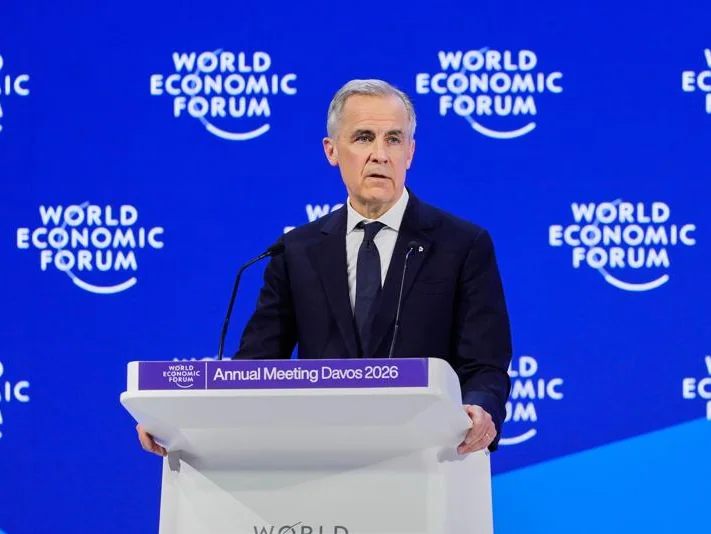
Prime Minister Mark Carney is trying to reset how Canada governs itself—away from comfortable symbolism and toward the hard mechanics of power. His language has shifted noticeably. He speaks of a “new world order,” of economic coercion, and of an era where the assumptions of the post–Cold War world no longer hold. The underlying message is blunt: in today’s environment, sovereignty is not proclaimed through speeches, but earned through capacity. This is An Analysis of Carney’s Approach to Governance at its core.
That diagnosis is difficult to dispute. Where the uncertainty lies is in whether the government’s response is sufficiently disciplined, aligned, and executable to meet the scale of the challenge Carney himself has identified. His project is not ideological so much as managerial. He is attempting to pull the federal government out of a process-heavy culture and reorient it toward delivery. Initiatives such as the Major Projects Office, the Building Canada Act, and a federally supported housing delivery vehicle all point in the same direction: Ottawa wants to decide how projects get built, not simply debate whether they should happen.
This marks a clear break from recent practice. For years, federal authority was exercised through incentives, consultations, and symbolic alignment with broad social goals. Accountability for outcomes was diffuse. Timelines stretched. Results often came second. Carney is trying to invert that logic—placing execution at the centre. But intention alone does not create capability, and that gap is where risk begins to accumulate.
The regional politics are especially fragile. Western provinces are demanding speed and export capacity. Ontario is focused on competitiveness and housing supply. Quebec wants infrastructure, but without federal encroachment. Atlantic Canada is looking for connectivity and economic opportunity. These priorities do not naturally align. They must be actively sequenced and reconciled through delivery. That reconciliation will only hold if projects actually move forward. Announcements without approvals, approvals without construction, and construction without completion will quickly reveal the limits of centralized coordination.
Inside the Liberal Party, tensions are already visible. The decision to remove the consumer carbon tax quietly acknowledged a political reality: legitimacy matters. Voters will not accept visible costs without visible benefits. Carney appears to be replacing household-level pain with industrial-scale solutions—pricing emissions where they are produced and investing where reductions can realistically be achieved. The logic is sound. The politics are volatile. A party long accustomed to moral clarity on climate policy now has to accept energy development, carbon capture, and trade-offs that resist easy slogans.
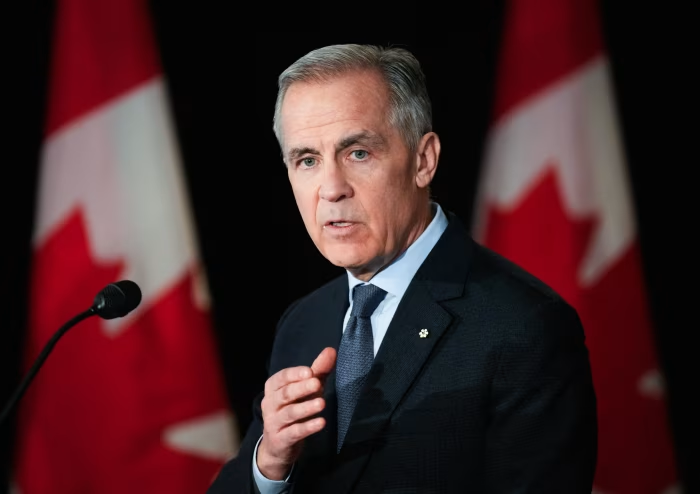
The most serious risks, however, sit in foreign policy and trade. Carney’s rhetoric increasingly signals strain, particularly in relation to key partners. Some of this may simply describe reality. Some of it may be strategic. Seen through a game-theory lens, it raises a pointed question: is the government pursuing an “escalate to de-escalate” strategy? In strategic terms, that approach involves raising tension to strengthen one’s negotiating position before stepping back toward compromise. When used carefully, it can create leverage. When used loosely, it invites miscalculation.
There are hints that this logic is in play. Tough language toward Washington plays well domestically. Talk of diversification suggests optionality ahead of CUSMA renegotiations. Assertive rhetoric establishes resolve that can later be softened. But the danger is real. Canada does not control escalation dynamics with the United States. Its leverage comes less from posture than from reliability, throughput, and credibility. Creating friction without fully built alternatives risks turning strategy into exposure.
There may also be a short-term electoral calculation at work. Heightened international tension can consolidate domestic support ahead of a spring election. But elections ultimately reward performance, not theory. If escalation is not matched by visible execution, the disconnect will surface quickly. Permits must be issued. Homes must be built. Projects must be completed. Timelines must be met.
In the end, this agenda will succeed or fail on delivery. Canadians are no longer persuaded by elegant diagnoses alone. Carney is right that the world has changed. He is right that Canada must rebuild its capacity to act. But power is not declared—it is demonstrated. If this program delivers, it will represent a genuine turning point. If it does not, it will underline a harder truth: that escalating rhetoric is far easier than executing power, and far more dangerous when execution falls short.