
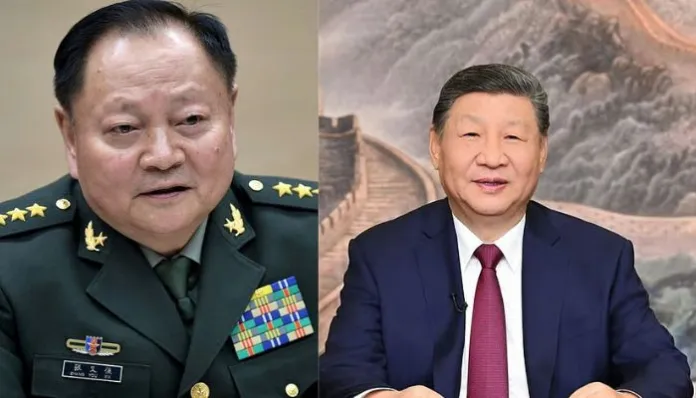
On January 20, 2026, an unexpected absence sent shockwaves through Beijing’s political circles. Zhang Youxia and Liu Zhenli—two of the most senior figures in China’s military—failed to appear at the opening of a high-level study session for provincial- and ministerial-level Chinese Communist Party (CCP) officials. In a system where visibility equals power, their disappearance was impossible to ignore.
Zhang, a vice-chairman of the Central Military Commission (CMC) and a member of the Politburo, sits at the very core of China’s decision-making structure. Liu, meanwhile, serves as a CMC member and chief of staff of the Joint Staff Department, making him one of the People’s Liberation Army’s (PLA) top operational commanders. When both men vanished from public view at the same time, speculation quickly turned into alarm.
A Rarely Seen Speed of Repression
Just four days later, the CCP’s Ministry of National Defense confirmed that Zhang and Liu were under investigation for “serious violations of discipline and law.” The speed of the announcement was striking. Traditionally, the CCP keeps the fate of fallen senior officials shrouded in secrecy for months, sometimes years. This unusually swift disclosure shattered the fragile political balance inside Zhongnanhai at the very start of the new year.
The timing was especially consequential. Zhang Youxia, widely believed to be one of the few figures capable of challenging Xi Jinping, was reportedly preparing a renewed push against Xi ahead of the CCP’s annual “Two Sessions” meetings scheduled for March 5. Instead of launching a challenge, Zhang and his ally were struck first—removed before they could act.
Xi Jinping and a Military Power Struggle
The disappearance of Zhang and Liu cannot be separated from the broader purge rocking China’s armed forces. On October 17, 2025, the Ministry of National Defense announced the removal of nine senior military figures, including vice CMC chairman He Weidong and former Political Work Department head Miao Hua—both widely seen as allies of Xi Jinping. The purge came just days before the fourth plenary session of the CCP’s 20th Central Committee.
Despite these upheavals, Xi emerged formally intact. He lost no titles and retained his position as chairman of the CMC. Yet the structure beneath him collapsed. From a seven-member body, the CMC was reduced to just two active figures: Xi himself and newly promoted vice chairman Zhang Shengmin.
Zhang Shengmin’s elevation initially appeared to strengthen Xi’s hand. Known as part of Xi’s inner-circle “Shaanxi Gang,” Zhang is considered personally loyal. Still, his promotion came with limits. Unlike his predecessor, he was not elevated to the Politburo, hinting at unresolved resistance within the party’s upper ranks.
What emerged instead was a tense political stalemate—one that exposed deep fractures between party and military factions and suggested that the CCP’s internal struggle could no longer be contained.
Who Controls Zhang and Liu Now?
The question of who is actually handling the investigations into Zhang Youxia and Liu Zhenli has only deepened the mystery. Reports from Vision Times claim that Cai Qi, a senior civilian party official, is overseeing Zhang’s case. If true, this would represent a dramatic violation of long-standing CCP norms, with non-military organs directly intervening in PLA affairs.
In previous purges, such as those involving He Weidong and Miao Hua, investigations were explicitly conducted by the CMC’s Discipline Inspection Commission. This time, however, the Defense Ministry’s announcement conspicuously avoided mentioning CMC approval. The omission has raised serious doubts about whether the military’s own disciplinary apparatus is truly in control.
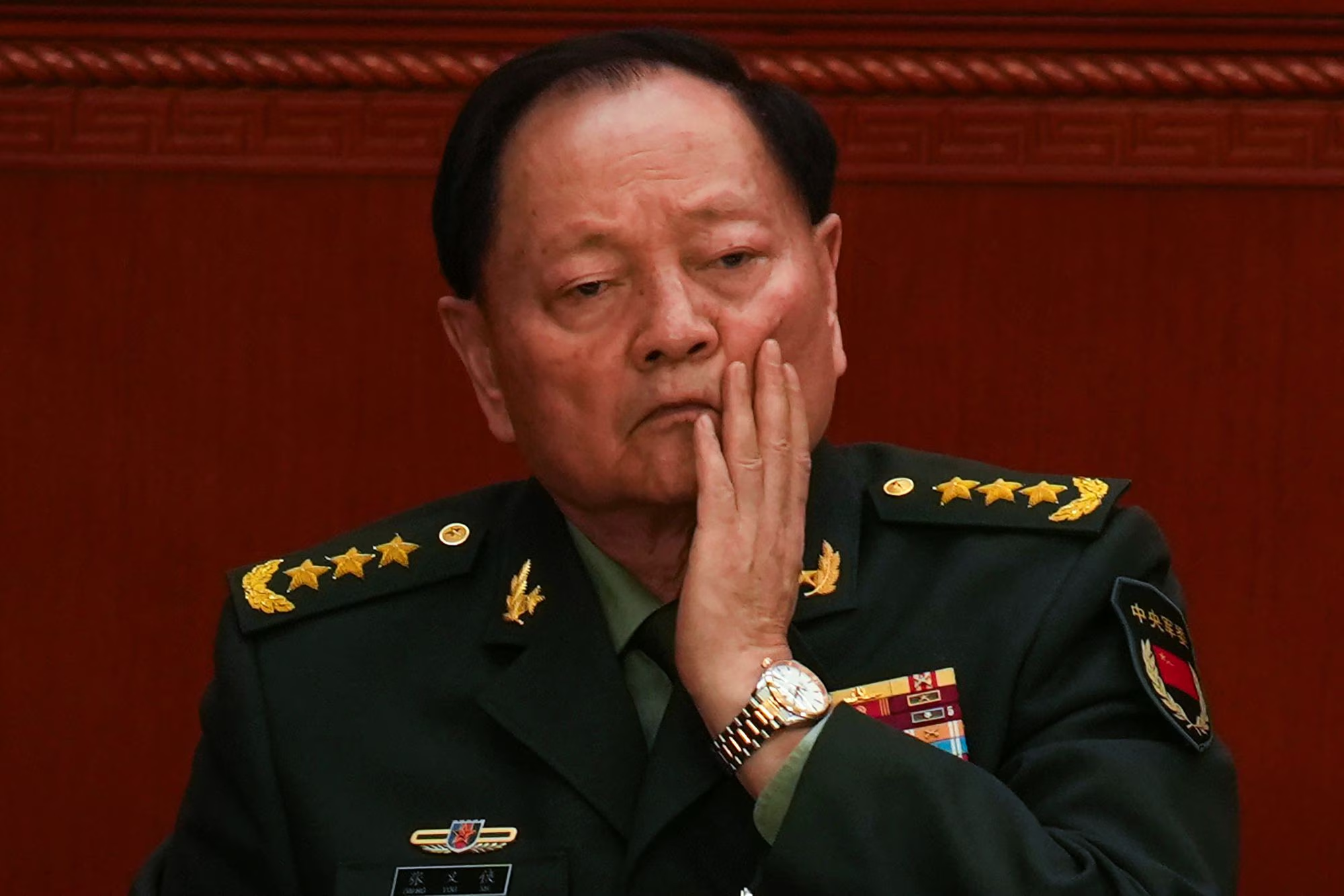
If Zhang and Liu were detained by civilian bodies such as the Central Guard Bureau, the Ministry of Public Security, or state security agencies, handing them back to the CMC would be highly unlikely. Both generals command deep loyalty within the PLA, and their supporters would not easily accept outside interference.
Such a move would also expose a deeper weakness. If Xi Jinping relied on non-military forces to neutralize senior generals, it would suggest that he no longer trusts—or controls—his own army.
A Desperate Intervention by Party Elders?
There is, however, another possibility. The disappearance of Zhang and Liu may not have been driven solely by Xi’s faction. It could reflect a last-ditch intervention by CCP elders desperate to prevent an open showdown at the upcoming Two Sessions.
If Zhang and Liu were preparing a direct challenge and had coordinated with party veterans in advance, the elders may have acted first—detaining the generals to prevent chaos and ensure that “the gun” did not overpower the party. Such a move would explain why the official announcement referred only to the “Party Central Committee,” omitting any reference to the Central Military Commission.
In this scenario, a temporary alignment between military challengers and party elders would have collapsed almost immediately, leaving Zhang and Liu isolated and vulnerable.
An Uncontrolled Endgame
By early 2026, the CCP’s internal deadlock had pushed the regime into dangerous territory. The fourth plenum in October 2025 failed to resolve fundamental power struggles. Three months later, the CMC’s near-collapse turned military governance into a fragmented battlefield—and possibly marked the beginning of the regime’s terminal phase.
If the crackdown on Zhang and Liu was orchestrated by Xi’s camp, it looks less like a show of strength and more like a desperate attempt at survival. Nearly all of the generals personally promoted by Xi have already been purged. Elevating mid-level officers to fill the gaps offers no guarantee of loyalty, especially when those officers see how quickly their predecessors fell.
Should Xi’s faction push further—targeting party elders or rival factions such as Hu Jintao’s Communist Youth League network—the conflict could escalate into outright political bloodshed. Even if Xi did not initiate the current investigations, he is almost certain to exploit them. The elders, in turn, will be forced to respond.
The result is a power struggle with no clear victor and no clear limits. As 2026 begins, the CCP’s infighting is spilling into public view at unprecedented speed. That exposure, more than any single purge, suggests that the system itself is failing.
What remains is uncertainty—an uncontrollable political endgame that points toward accelerating collapse. The disappearance of Zhang Youxia may not just mark the fall of a general, but the unraveling of the red dynasty itself.