

What started as a crisis has quietly evolved into an opportunity. Across the country, a Rural Renaissance is reshaping where people live, how they work, and how the nation rebuilds the industrial and human foundations of long-term resilience. The shift is not cosmetic or temporary—it reflects How Canada’s Economy Is Growing Faster Outside Its Biggest Urban Centers.
Canada did not plan this moment of transformation. Yet the past few years have made one thing clear: the country can no longer afford to ignore what has been exposed. The pandemic, the housing affordability crunch, and the rapid advance of artificial intelligence revealed how fragile an urban-centric, import-dependent, service-heavy economic model has become. Together, they forced a hard reassessment of how the country stays productive, secure, and self-reliant.
A Shock That Changed Everything
The outbreak of COVID-19 in late 2019 was more than a health emergency. It became a geopolitical wake-up call. Global supply chains fractured, and essential goods—from pharmaceuticals to protective equipment—suddenly became scarce. Decades of offshoring had left North America, including Canada, exposed and dependent.
Factories stalled. Semiconductor shortages rippled through entire industries. The belief that globalization alone guaranteed stability collapsed almost overnight. One lesson stood out: a country that cannot make what it needs cannot fully protect its people. Economic sovereignty, it turned out, is inseparable from national security.
The Great Internal Migration
Alongside supply-chain stress came a surprise few policymakers anticipated—a historic internal migration. Between 2019 and 2023, hundreds of thousands of Canadians left major metropolitan areas for smaller cities, towns, and rural regions. What had once been a trickle became a surge, driven by remote work, lifestyle reassessment, and a deepening housing crisis.
In the largest cities, home prices soared far beyond the reach of average incomes. Young families and skilled workers, priced out and burned out, began looking elsewhere. That “elsewhere” increasingly meant rural and mid-sized communities.
This movement was not simply about quieter streets or scenic views. It signaled a deeper economic rebalancing—one closely tied to the rise of AI.
AI and the Return of the Trades
For decades, Canadians were encouraged to pursue white-collar careers, while skilled trades were quietly sidelined. Office jobs, professional services, and digital work were presented as the safest path forward.
Artificial intelligence has upended that assumption.
Many of the roles that replaced traditional trades—coding, document review, financial modeling—are now among the most exposed to automation. At the same time, hands-on professions are proving remarkably resilient. Welding, electrical work, construction, heavy equipment operation, and power engineering require physical judgment, adaptability, and real-world problem-solving that machines cannot easily replicate.
These are also the skills needed to rebuild domestic manufacturing, expand energy capacity, process critical minerals, and construct much-needed housing. In practical terms, the future of national resilience is being shaped not in boardrooms, but on job sites.
Why Rural Communities Are Pulling Ahead
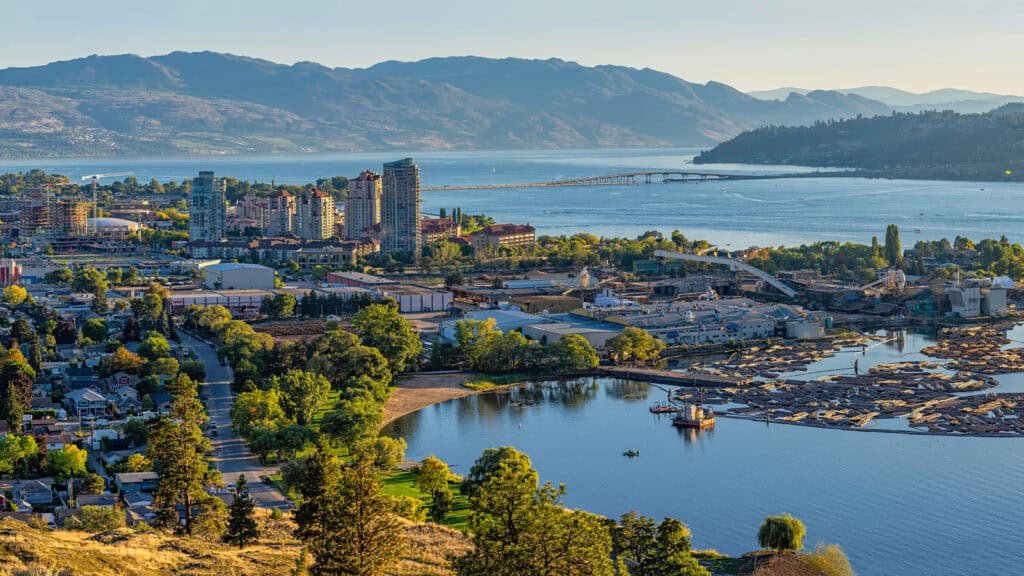
Rural and mid-sized regions offer advantages that large cities increasingly struggle to match. Land is more affordable. Housing is attainable. There is room—both physical and regulatory—for factories, energy projects, and infrastructure that would be prohibitively expensive in dense urban cores.
For skilled workers, these communities offer something equally important: the ability to raise families without constant financial pressure. The economic benefits ripple outward, supporting local businesses, schools, and services.
There are social gains as well. Lower-density living is linked to reduced stress and improved mental well-being. Rural life fosters stronger social ties, practical self-reliance, and a renewed connection to land and community. Newcomers are not anonymous residents; they become visible contributors to shared local life.
Productivity, Reimagined
Canada’s long-term prosperity still depends on productivity—but productivity is no longer confined to glass towers and downtown cores. It depends on skilled, mobile people who can build, repair, and operate the physical systems that keep a country running.
AI may transform the digital economy, but it cannot pour concrete, weld pipe, maintain power grids, mine minerals, harvest crops, or build homes. Those tasks require human expertise—and increasingly, that expertise is choosing to live outside major cities.
A Future Rooted Beyond the Cities
The Rural Renaissance is not a rejection of modernity. It is a response to reality. It aligns with geopolitical pressures, technological disruption, and the everyday aspirations of families seeking stability and purpose.
The pandemic exposed vulnerabilities. The affordability crisis forced hard choices. AI is rewriting the labor market. Together, these forces have opened a credible path to renewal—one grounded in space, skills, and sovereignty.
Canada now faces a clear choice. It can cling to an urban-centric model that no longer delivers broad prosperity, or it can embrace the dispersed, resilient future already taking shape across its countryside.