
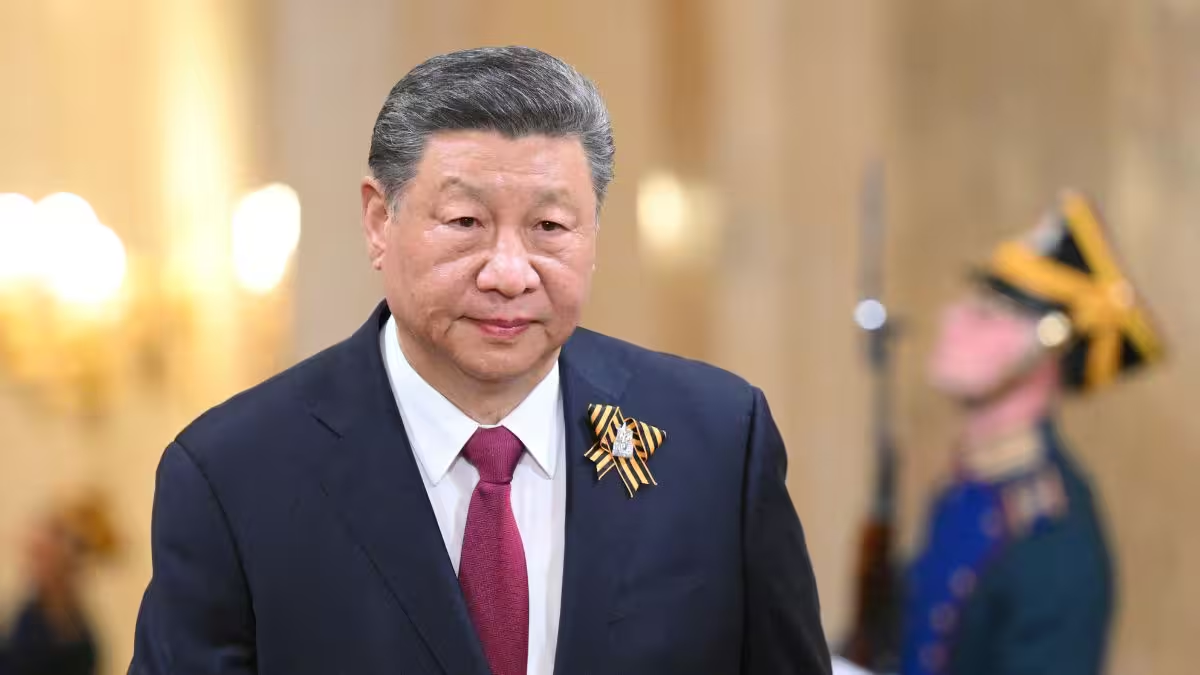
China’s decisive moment has arrived — but it comes at a cost to the CCP’s authority.
What had long been whispered about behind closed doors finally erupted into the open by January 25, when the internal struggle inside the Chinese Communist Party (CCP) shattered the carefully maintained illusion of unity. The Party’s long-projected image of discipline and cohesion—essential to its grip on power—has fractured, exposing a leadership locked in open conflict at a perilous time for the country.
For years, rival factions inside the CCP worked to preserve a shared façade of solidarity, knowing that any visible split could undermine their ability to rule mainland China. That restraint has now evaporated. With Party cohesion broken, unrest—both within elite circles and among the public—faces fewer internal checks than at any time in recent decades.
Xi’s Precarious Dependence on Force
The breakdown has left nominal leader Xi Jinping heavily reliant on the state’s security apparatus to contain instability. Control has increasingly shifted toward the Ministry of Public Security, its operational arm the Public Security Bureau, and the People’s Armed Police. These bodies are now tasked not only with suppressing civilian unrest, but also with policing dissent within the Party itself and even within the People’s Liberation Army (PLA).
Over the past year, operational influence over the PLA had drifted toward Central Military Commission Vice Chairman Gen. Zhang Youxia, who steadily sidelined many of Xi’s loyalists from key military posts. For a time, Xi appeared politically cornered.
That balance shifted in mid-January. Despite earlier efforts to engineer a quiet compromise—one that would have preserved the appearance of Party normalcy—Xi struck back. His counteroffensive, aimed particularly at Zhang and senior military figures, followed a critical miscalculation by his opponents during the Fourth Plenary Session of the 20th Party Congress in October 2025. In the interest of preserving unity on paper, Xi was allowed to retain his formal titles, even as his rivals expected to marginalize him in practice.
They had the chance to remove him outright—and did not. Xi understood that hesitation as weakness. If he failed to act swiftly, his own political survival would be at risk.
From Quiet Retirement to Open Retaliation
Under the tentative deal, Xi was expected to step aside “on health grounds” sometime in early 2026 after being excluded from decision-making. Instead, that breathing space allowed him to regroup. Developments following Gen. Zhang’s high-profile visit to Moscow in late November—where he received unusually elevated treatment—further escalated tensions. Reports of an attempted assassination during Zhang’s flight underscored just how far the struggle had intensified.
Events spiraled rapidly from there. The sudden death of Air Force commander Gen. Chang Dingqui while in detention signaled that the anti-Xi faction could strike directly at Xi’s inner circle. Days later, a deadly explosion in a Beijing ring-road tunnel targeting an official convoy—officially blamed on an accident—was widely interpreted as either a failed assassination attempt or a stark warning that Xi himself was vulnerable.
By that point, the conflict between Xi’s camp and his opponents—military leaders, Party elders, and reformist figures—was unmistakably open. The CCP’s claim to unified authority, already weakened, was becoming increasingly implausible.
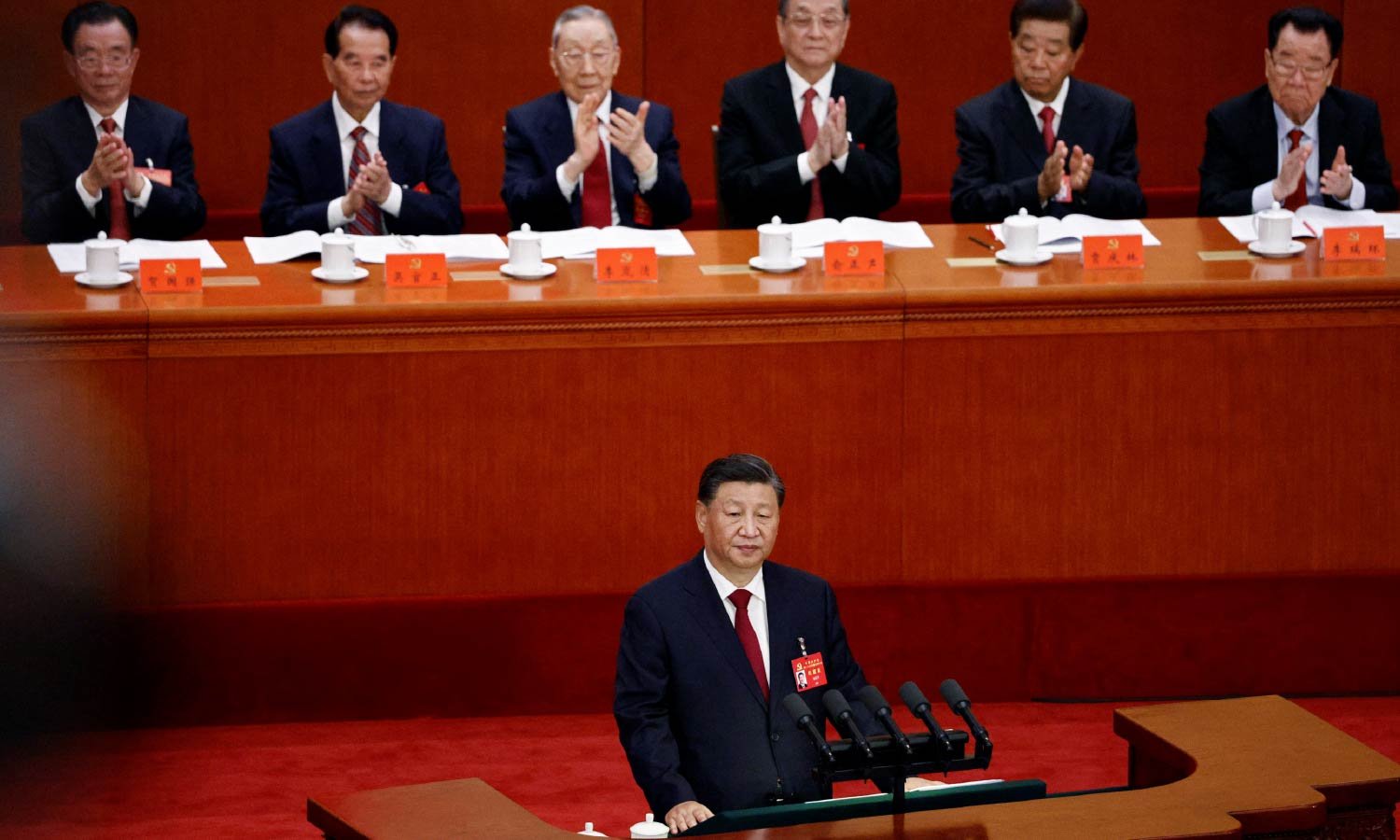
A Failed Seizure and a Deepening Purge
Confidence within the anti-Xi faction culminated in an audacious plan to detain Xi himself. As Xi moved frequently between secure locations for his own safety, intelligence suggested he would spend a night at the Jingxi Hotel, a restricted facility for senior officials. A small armed unit moved in—only to find Xi absent and security forces waiting. The operation collapsed. Gen. Zhang and Gen. Liu Zhenli were detained, along with members of their families.
Rather than ending the struggle, the arrests opened a new phase. Dozens of PLA officers were detained in the immediate aftermath, leaving only a handful of full generals still in place. Whether these purges reflected Xi’s consolidation of power or competing clean-ups by rival camps remains unclear. What is certain is that the turbulence has not subsided.
As of January 25, the outcome of this internal civil war remained uncertain. For Xi to feel secure, further crackdowns against military rivals, Party elders, and influential “princelings” would likely be required. Yet each additional purge risks further fracturing the very system he is trying to control.
Public Anger and the Taiwan Question
The wider danger lies beyond elite politics. With the CCP visibly divided and parts of the PLA potentially unreliable, China’s disaffected population—already burdened by economic hardship—may feel emboldened to escalate protests. Promises that life would improve under Party stewardship ring increasingly hollow.
This internal instability also casts serious doubt on Beijing’s repeated claims about reunification with Taiwan. There is no cohesive command structure capable of mounting a near-term invasion, no conventional military capacity to seize the island without catastrophic losses, and no favorable international distraction to exploit. Any such move would almost certainly trigger regional escalation involving Japan, the United States, and potentially India.
A Pyrrhic Victory in the Making
In the short term, Xi and his closest allies may have secured a pause in the struggle. But even if he fully reasserts control over the CCP, the victory may prove hollow. The Party’s authority is eroding, the economy continues to slide, and public trust is fraying.
China’s decisive moment has arrived — but it comes at a cost to the CCP’s authority.
Whether Xi’s gamble restores control or accelerates systemic collapse is the question now hanging over Beijing—and over China’s future.