
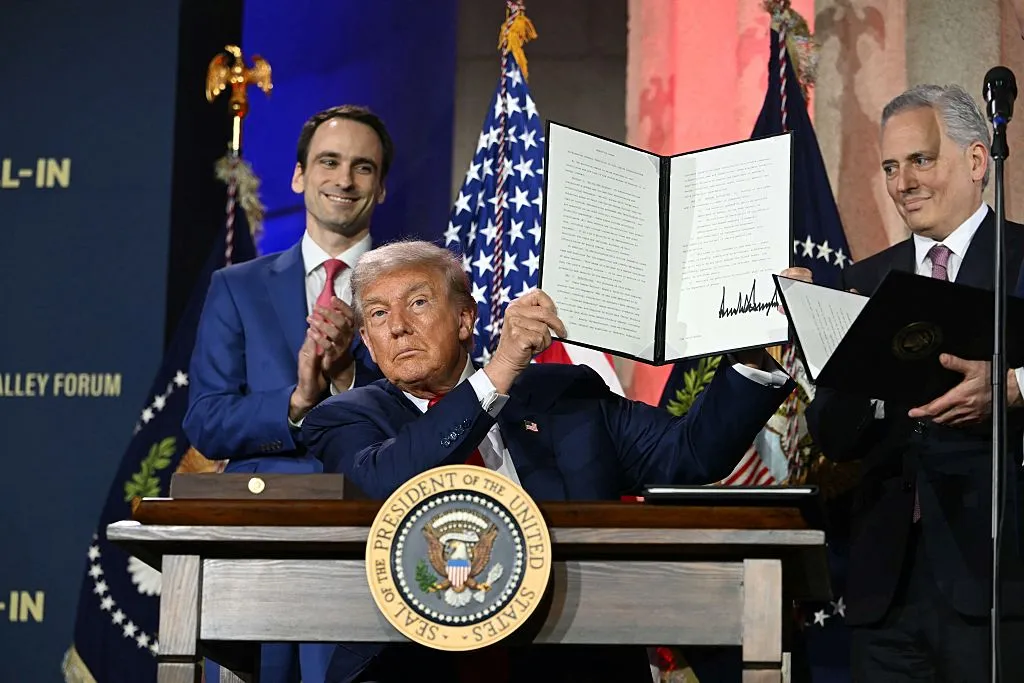
President Trump’s latest Executive Order on “ensuring space superiority” marks a notable shift in how the United States officially thinks about space. For the first time, a presidential directive frames space not just as a scientific frontier or a military domain, but as a pillar of long-term civilization, economic growth, and national power. In that sense, Trump’s New Space-Focused Executive Order Shows Promise as a foundational statement of modern U.S. space policy.
What makes this order stand out is its clarity. It openly acknowledges America’s economic interests beyond Earth and assigns responsibility for protecting those interests across multiple institutions. Instead of treating space as a collection of siloed programs, the order places NASA, the Department of Commerce, and the Department of War within a single strategic framework and timeline. That alone represents a significant departure from decades of fragmented policy.
A Clear Roadmap Back to the Moon
Released alongside the swearing-in of a new NASA administrator, the Executive Order addresses long-standing ambiguities in U.S. space ambitions. It leaves little doubt that the United States intends to return to the Moon—not as a symbolic gesture, but as the first step toward sustained lunar economic activity. The document sets firm targets: astronauts back on the lunar surface by 2028, followed by a permanent American presence by 2030.
Crucially, the order prioritizes power generation as the backbone of lunar development. By committing to a commercial nuclear power facility on the Moon by 2030, the administration signals an understanding that energy is the enabler of everything else—industry, habitation, research, and long-term innovation. Without reliable power, no serious off-world economy can exist.
Protecting Low-Earth Orbit and Expanding the Space Economy
The Executive Order also reaffirms that the United States will not surrender leadership in low-Earth orbit. It reiterates plans to transition from government-run platforms to commercially operated space stations by 2030. Achieving that goal will require unprecedented coordination between the White House, NASA, and the Department of Commerce.
The administration is betting heavily on the private sector, with the stated aim of attracting $50 billion in new domestic investment into space markets by the end of Trump’s term. If successful, this push could accelerate the growth of a robust space industrial base and cement the U.S. as the central hub of a global commercial space economy.
A Sharper Mandate for the Space Force
Perhaps the most consequential elements of the order concern the U.S. Space Force and the Department of War. Since the Space Force’s creation, debate has lingered over its true mission: was it merely a support arm for other services, or a force meant to actively defend American interests in space?
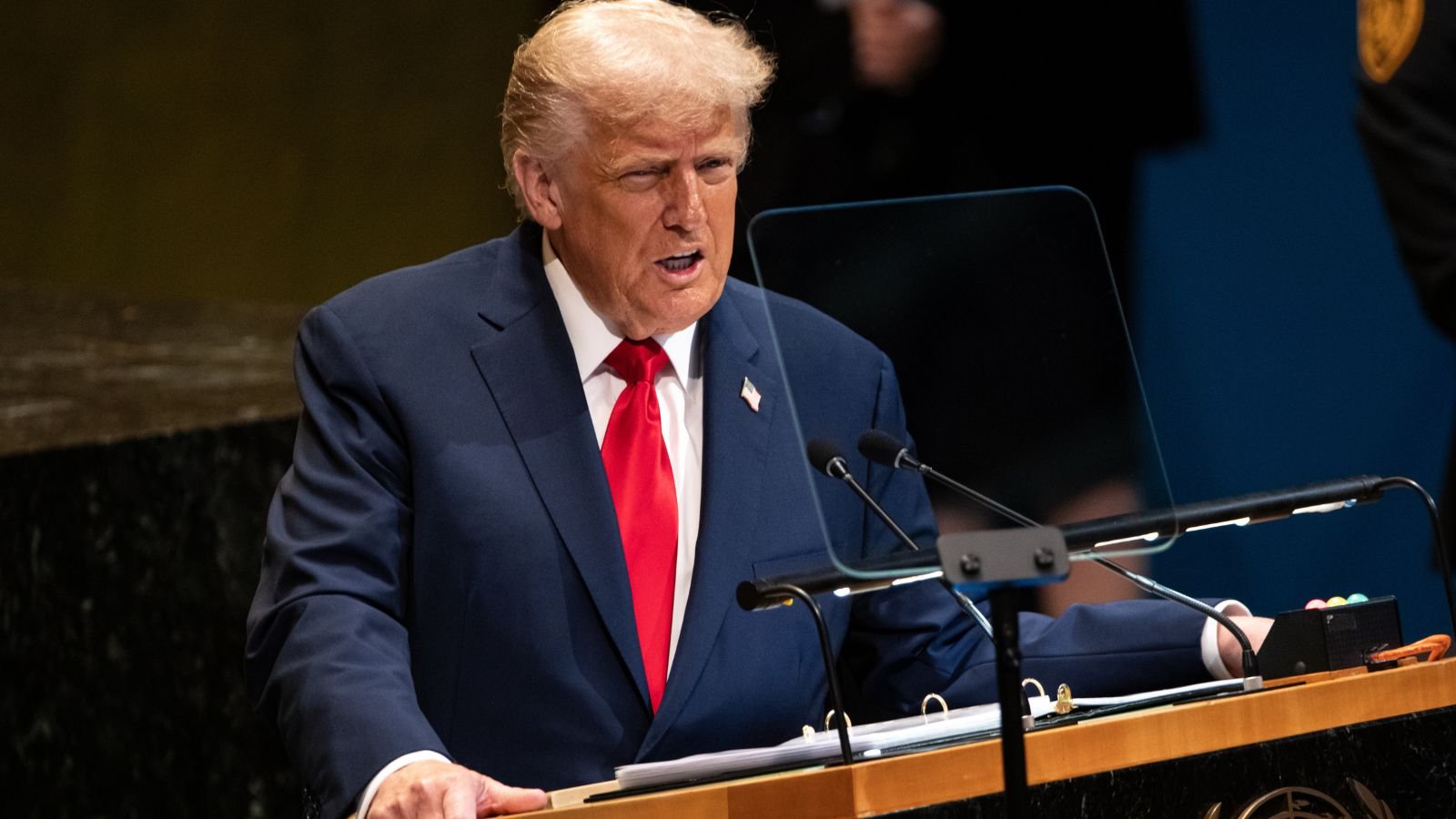
The new Executive Order answers that question directly. It defines the mission as securing and defending U.S. national and economic interests “in, from, and to space,” with explicit responsibility for detecting and countering threats from very low-Earth orbit through cislunar space. This language leaves little room for ambiguity—the Space Force is expected to protect American assets and interests wherever they exist beyond Earth.
Addressing Nuclear Threats and Missile Defense
For the first time, a U.S. policy document openly treats the potential placement of nuclear weapons in space as a serious strategic concern. The order mandates the development of technologies capable of detecting, tracking, and countering such threats. It also reinforces the administration’s commitment to the Gold Dome space-based missile defense concept and to building a national security space architecture that can adapt quickly to emerging risks.
Promise, With a Caveat
Taken together, the Executive Order represents a meaningful and ambitious step forward. It articulates goals that extend beyond election cycles and recognizes space as central to America’s future prosperity and security. In that respect, Trump’s New Space-Focused Executive Order Shows Promise not just as policy, but as vision.
Still, ambition alone is not enough. As history has shown, entrenched bureaucracies often resist change, preferring continuity over disruption. If this order is to have the civilizational impact it aims for, the White House will need to maintain firm oversight and sustained pressure. Without that, even the boldest directives risk fading into procedural inertia—ending not with a bang, but with a whimper.