
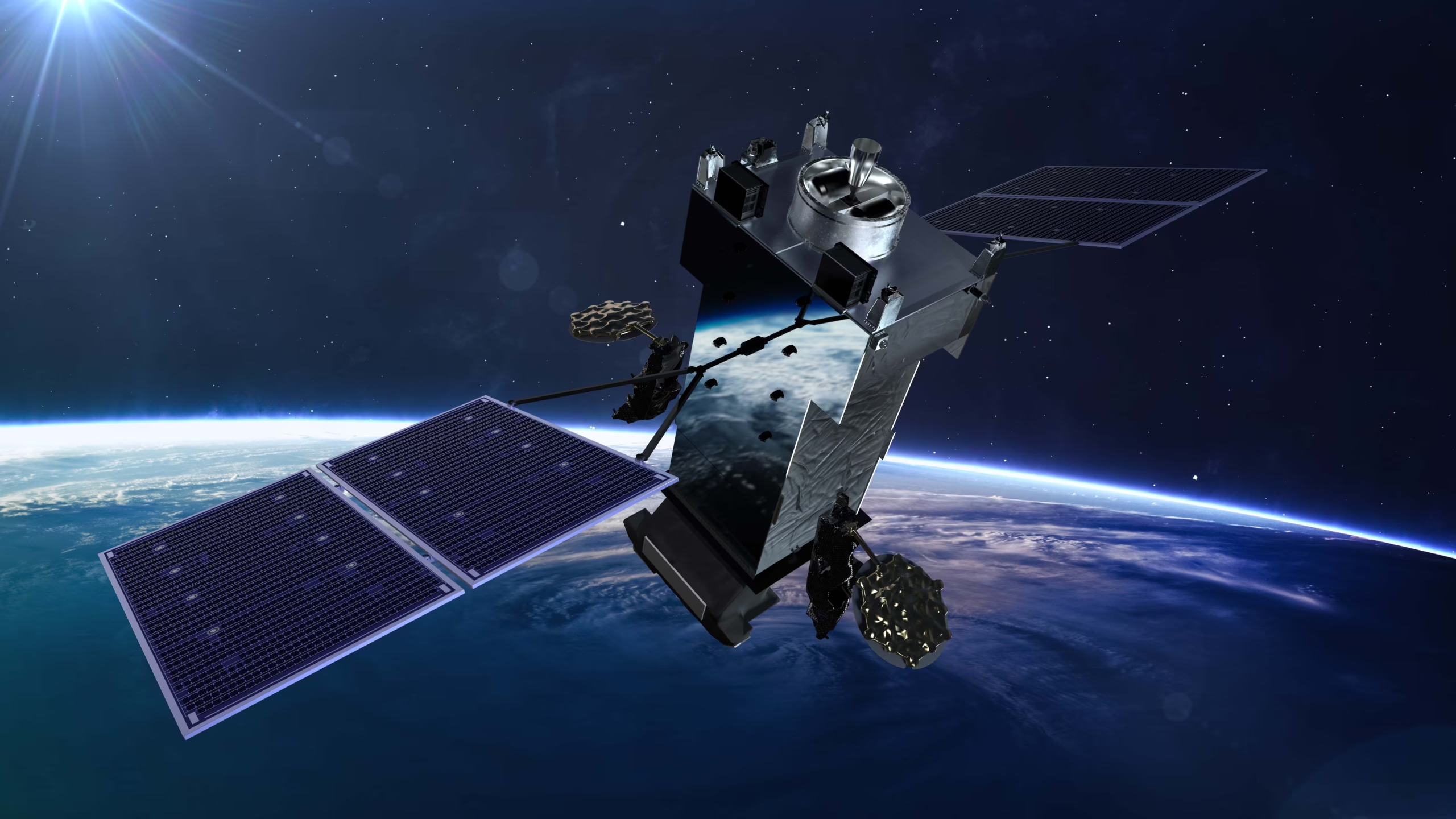
China steps up orbital surveillance and strengthens its military space capabilities in 2026 to challenge the US, as Beijing accelerates launches, rolls out massive satellite constellations, and fields increasingly sophisticated surveillance platforms. Together, these moves underscore a calculated effort to narrow the gap with Washington and assert greater influence in Earth’s orbit.
China kicked off its 2026 space calendar on Jan. 13 with two orbital missions in a single day, setting the tone for what could be a record-breaking year. Leveraging its “military-civil fusion” strategy, Beijing is expected to carry out more than 70 government-led launches, with total launches potentially surpassing 100 once commercial rockets are included. That would mark a notable jump from the 92 launches recorded in 2025 and reflect the growing tempo of China’s space activity.
Megaconstellations Take Center Stage
Large-scale satellite constellations are a cornerstone of China’s 2026 ambitions. The state-backed Guowang network is projected to deploy around 310 satellites this year, while the Qianfan constellation could add roughly 324 more. Combined, these programs alone would put an estimated 634 satellites into orbit in 2026—more than double the number China launched in 2025.
This rapid buildup highlights Beijing’s focus on scale and persistence in low Earth orbit, mirroring trends set by U.S.-led commercial constellations while maintaining firm state control over infrastructure and data.
Retrograde Orbits and Persistent Surveillance
The first Jan. 13 launch saw a Long March 6A rocket lift off from Taiyuan, carrying the Yaogan-50 (01) satellite into a highly retrograde orbit with a 142-degree inclination. Official statements framed the mission as supporting land surveys, agriculture, and disaster monitoring. Yet the Yaogan series is widely regarded as dual-use, with many satellites believed to host military-grade sensors for reconnaissance, imaging, and signals intelligence.
Choosing a 142-degree retrograde orbit is a costly but deliberate decision. Launching against Earth’s rotation demands extra fuel, yet it delivers clear operational benefits. Such an orbit enables faster ground-track coverage and frequent revisits over mid-latitude regions—spanning much of the continental United States, U.S. bases in Japan, South Korea, and Guam, and key Pacific sea lanes.
This frequent revisit capability allows analysts to track movements over time rather than capture isolated snapshots. It also strongly suggests the use of synthetic aperture radar (SAR), which can image through clouds and darkness. Paired with retrograde orbits, SAR systems are well suited for continuous, all-weather monitoring—an advantage for sustained military surveillance.
In a potential Taiwan-related crisis, this kind of coverage could support maritime domain awareness, missile targeting, and early warning by providing near-constant updates on U.S. force movements across the Pacific.
Guowang and the Shift to High-Frequency Launches
Roughly an hour after the Long March 6A mission, a Long March 8A rocket lifted off from the Hainan Commercial Space Launch Site, deploying nine satellites for the Guowang megaconstellation. Often described as China’s answer to Starlink, Guowang is expected to support communications, navigation, remote sensing, and space situational awareness.
Launching from Hainan signals a move away from traditional military spaceports toward commercial-style infrastructure designed for frequent, high-density missions. The Long March 8A, optimized for aggregated payloads, supports this shift and aligns with China’s gradual push toward reusability following the debut of the Long March 12 in late 2025.
Guowang’s opaque design has raised concerns in Washington, with analysts suggesting it may host dual-use or national security payloads—drawing comparisons to SpaceX’s classified Starshield program. Under China’s civil-military integration model, such a constellation could be routinely tapped for People’s Liberation Army operations or rapidly repurposed during a crisis.
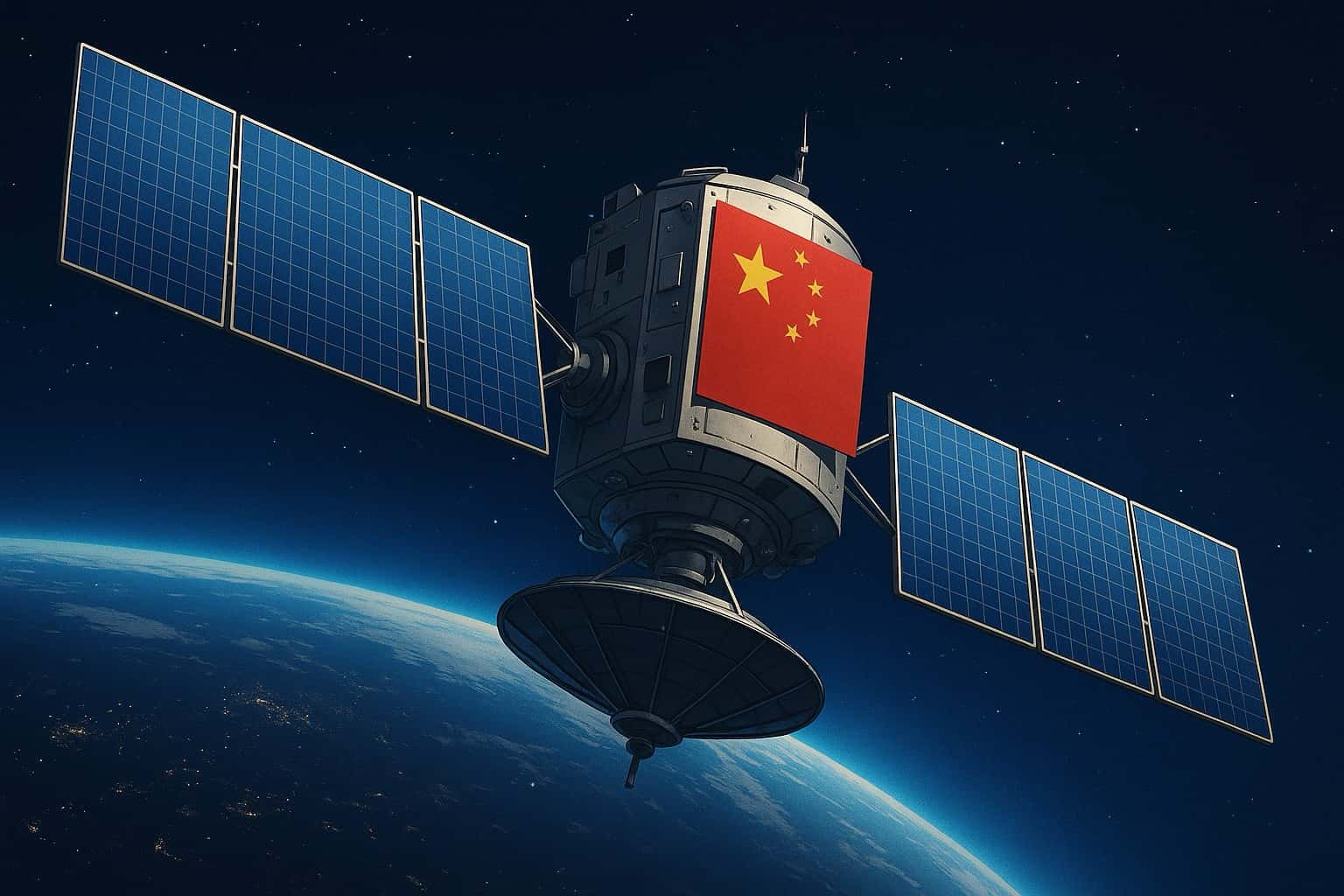
As a sovereign alternative to Starlink, Guowang would bolster PLA command and control, reduce reliance on U.S.-controlled satellite services, and complicate efforts to disrupt Chinese military communications. Its integration with terrestrial 5G and future 6G networks would further enhance resilience and centralized control, aligning with Beijing’s doctrine of informatized warfare.
Implications for the United States
China’s growing space footprint carries strategic consequences for the United States, even as Washington retains important advantages. The U.S. continues to benefit from unmatched commercial integration, rapid launch capability, and innovation. In 2025, SpaceX conducted 165 orbital launches—more than the rest of the world combined—largely using reusable Falcon 9 rockets that cut costs and enable rapid turnaround.
Institutionally, the U.S. Space Force is advancing a “Race to Resilience” strategy built around proliferated constellations that distribute risk across hundreds of smaller satellites. In late 2025, the Space Development Agency awarded $3.5 billion for 72 Tracking Layer satellites to provide global missile warning starting in 2029.
The United States also benefits from responsiveness. Commercial providers can launch larger, more capable payloads on short notice, while China’s state-dominated system remains more centralized and slower to adapt. The forthcoming Starship vehicle, now in testing, is expected to deliver payload capacity far beyond anything currently available to China, potentially replacing multiple launches with a single mission.
A Narrowing—but Persistent—Gap
Despite China’s rapid progress, studies suggest that proliferated U.S. constellations continue to strain Beijing’s finite anti-satellite capabilities. Maintaining this edge, however, will require sustained investment, realistic training, and deeper cooperation with allies.
As 2026 unfolds, China’s accelerating launch cadence, expanding megaconstellations, and emphasis on persistent surveillance make one point clear: space is no longer a supporting domain but a central arena of strategic competition—one where Beijing is moving quickly to challenge long-standing U.S. dominance.