
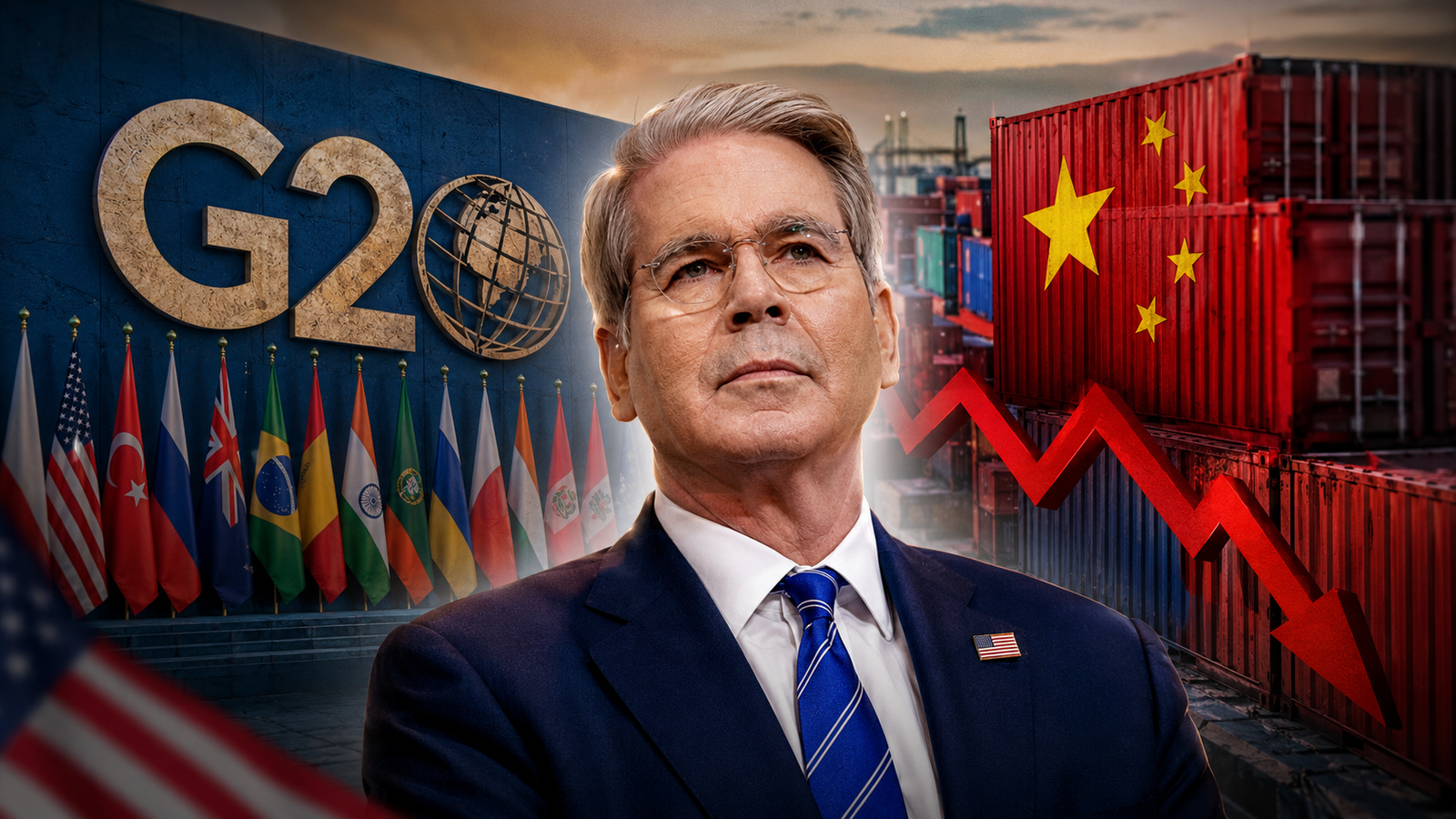
Scott Bessent Urges G20 Nations to Tackle Chinese Imports and Global Trade Imbalances
Scott Bessent G20 Trade Imbalances have emerged as a key issue in discussions over the global economy, with the U.S. Treasury Secretary urging G20 countries to take stronger steps to protect their domestic economies from a surge of Chinese imports.
Bessent has called on major economies to proactively address trade imbalances rather than allowing large and persistent differences in imports and exports to continue unchecked. His comments come amid growing concerns over China’s manufacturing strength, excess industrial capacity and the impact of Chinese goods on industries in other major economies.
Scott Bessent Calls for Stronger Action Against Chinese Imports
U.S. Treasury Secretary Scott Bessent is pushing G20 nations to adopt stronger measures to protect their domestic markets from Chinese imports.
The argument comes as several major economies face pressure from China’s ability to produce large quantities of goods at competitive prices. While inexpensive imports can benefit consumers and businesses, governments in several countries have raised concerns that sustained import growth can put pressure on domestic manufacturers.
Bessent’s position reflects Washington’s broader focus on reducing economic vulnerabilities linked to China’s trade surplus and manufacturing capacity.
Why Global Trade Imbalances Are a Concern
A trade imbalance occurs when a country consistently imports significantly more goods and services than it exports, or vice versa.
Large and persistent imbalances can become politically sensitive because they may affect domestic manufacturing, employment and investment.
According to Bessent’s argument, countries should not simply wait for trade pressures to intensify. Instead, governments should take proactive measures to address imbalances and strengthen their own economic resilience.
The issue is particularly important for the G20 because its members represent a large share of global economic activity.
China’s Manufacturing Strength at the Centre of the Debate
China has become a dominant global manufacturing power across numerous industries. Its production capabilities span electronics, machinery, electric vehicles, batteries, solar equipment and a wide range of consumer products.
For other countries, the availability of competitively priced Chinese products can support lower costs. However, policymakers have increasingly debated whether the scale of imports could weaken domestic industries.
Bessent’s call for action places this issue at the centre of the broader conversation about how G20 economies should respond to China’s expanding industrial capacity.
What Could G20 Countries Do?
Countries have several tools available when attempting to address trade imbalances.
Governments can use tariffs, trade safeguards, investment policies, domestic manufacturing incentives and measures aimed at diversifying supply chains.
However, aggressive protectionist policies can also create risks. Higher tariffs may increase costs for consumers and companies that rely on imported components, while retaliatory measures from trading partners could affect exporters.
The challenge for G20 governments is therefore to balance protection of domestic industries with the benefits of international trade.
Impact on the Global Economy
The debate over Chinese imports extends beyond individual countries.
If major economies simultaneously introduce stronger trade barriers, global supply chains could undergo significant changes. Companies may accelerate efforts to diversify manufacturing and source components from multiple countries.
At the same time, increased protectionism could make international trade more expensive and potentially slow global economic activity.
This makes the issue particularly important for G20 policymakers, who must consider both domestic economic interests and the wider consequences for global markets.
India and Other Emerging Economies
For emerging economies, the debate presents both challenges and opportunities.
Countries such as India are attempting to expand domestic manufacturing while remaining integrated with global supply chains. Reducing excessive import dependence can support local industries, but access to competitively priced components and equipment remains important for manufacturers.
A shift in global supply chains could potentially benefit countries that are able to attract new investment and provide reliable alternatives to established manufacturing centres.
G20’s Role in Addressing Trade Imbalances
The G20 provides a platform where the world’s largest economies can discuss issues affecting global economic stability.
Bessent’s call for coordinated action suggests that the United States wants trade imbalances to become a more prominent part of the group’s economic discussions.
A coordinated approach could potentially reduce the risk of individual countries taking isolated actions that trigger wider trade disputes.
However, reaching agreement among G20 members may be difficult because countries have different economic structures, export priorities and relationships with China.
Growing Pressure for More Balanced Trade
The debate over Scott Bessent G20 Trade Imbalances reflects a broader shift in global economic policy.
Governments are increasingly examining the resilience of their supply chains and the effect of large-scale imports on domestic industries. The experience of recent global disruptions has also encouraged countries to think more carefully about strategic dependence on particular markets.
Bessent’s message to the G20 is that trade imbalances should be addressed proactively rather than after they become a major economic problem.
What Happens Next?
The response from G20 nations will be closely watched as policymakers consider how to balance open trade with domestic economic protection.
Any significant changes to tariffs, trade rules or industrial policies could influence global supply chains, commodity markets and investment decisions.
For businesses, the evolving trade environment means that supply-chain diversification and closer monitoring of international trade policies could become increasingly important.
Key Takeaway
Scott Bessent G20 Trade Imbalances highlights the U.S. Treasury Secretary’s push for G20 nations to take stronger measures against the economic impact of Chinese imports and proactively address persistent global trade imbalances. While greater protection of domestic industries could support local manufacturing, policymakers also face the challenge of avoiding higher costs, retaliatory tariffs and wider disruption to global trade.
FAQs
Who is Scott Bessent?
Scott Bessent is the United States Treasury Secretary and a senior official involved in U.S. economic and international financial policy.
What is Scott Bessent asking G20 countries to do?
Bessent is urging G20 nations to take stronger measures to protect their economies from Chinese imports and proactively address global trade imbalances.
Why are Chinese imports a concern for some G20 countries?
Policymakers are concerned that large volumes of competitively priced Chinese goods could put pressure on domestic manufacturers and industries.
What are trade imbalances?
Trade imbalances occur when countries have persistent differences between the value of what they export and what they import.
Could stronger trade restrictions affect consumers?
Yes. Tariffs and other trade barriers can protect domestic industries but may also increase the cost of imported products and components.