
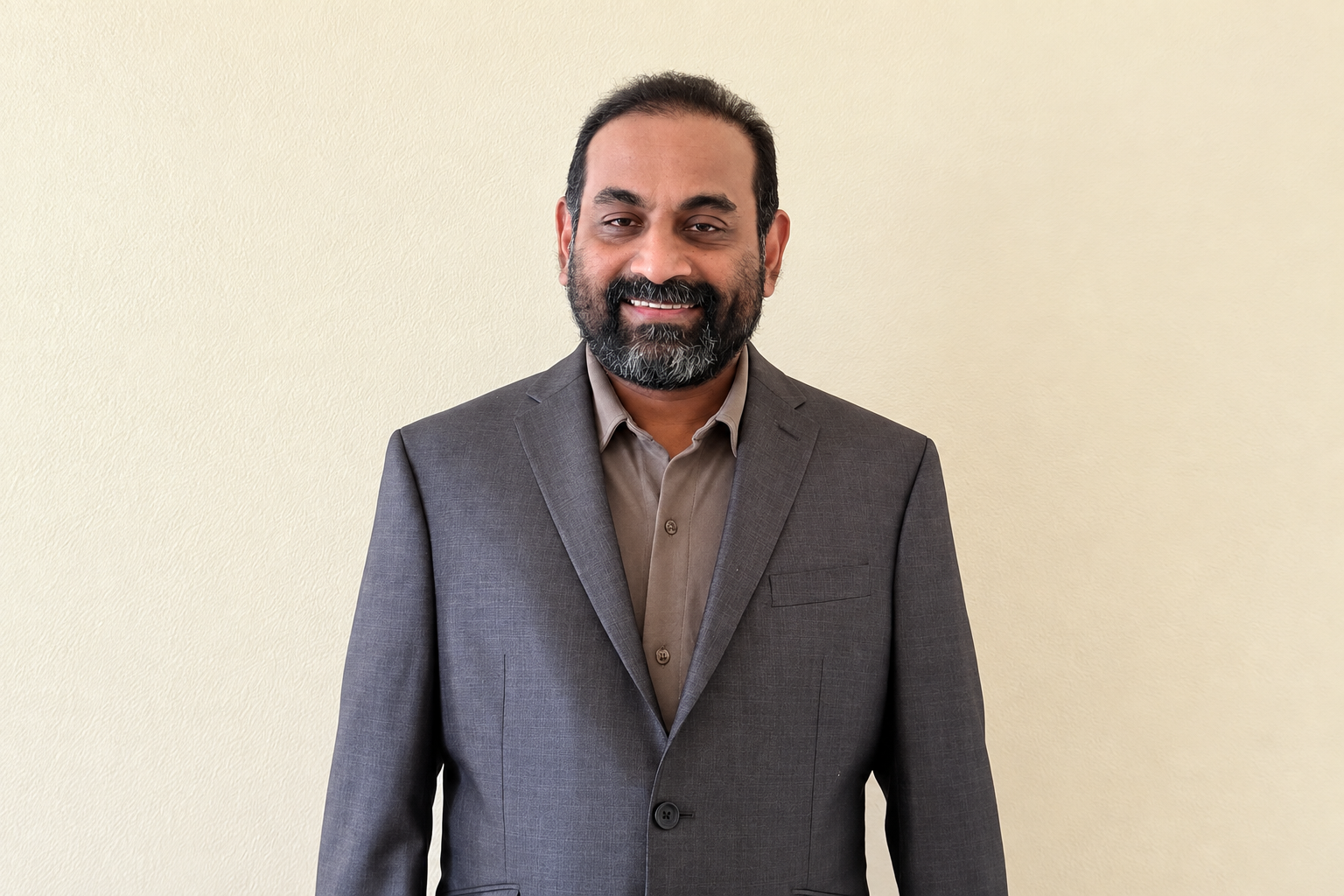
As governments and industry leaders invest heavily in semiconductors, wireless communications, and next-generation network infrastructure, the technologies connecting billions of people increasingly depend on engineers who can bridge research, product development, and large-scale commercialization.Among them is Unnikrishnan Gopinathan Pillai, a wireless systems and RF engineering leader whose career has spanned more than three decades across telecommunications infrastructure, mobile devices, semiconductor technologies, and 5G networks. Over the course of his career, Pillai has contributed to products deployed worldwide, earned four U.S. patents and one Indian patent, led engineering initiatives at major technology companies, served as a reviewer for international conferences and journals, and contributed to advances spanning rural communications, smartphones, RF semiconductors, and wireless infrastructure.
Building Connectivity in Rural India
Pillai began his engineering career at the Centre for Development of Telematics (C-DOT), India’s telecommunications research and development organization, where he designed solid-state power amplifiers for Very Small Aperture Terminal (VSAT) satellite communication systems. These systems helped extend communications infrastructure into rural and underserved regions of India, expanding access to telecommunications services where connectivity had historically been limited. Former colleagues have credited his technical contributions with supporting faster deployment of VSAT-based connectivity, an early example of his focus on applying advanced engineering solutions to practical communications challenges.
Driving Mobile Innovation at Kyocera Wireless
Pillai later joined Kyocera Wireless, where he advanced to Director of Hardware Engineering and led initiatives involving RF system design, product validation, and mobile device development. During this period, he introduced automated RF testing methodologies that significantly shortened engineering validation cycles and improved development efficiency. According to industry colleagues, the resulting process improvements enabled faster product development and greater engineering productivity. Among his most significant accomplishments was serving as Hardware Architect for an Android smartphone platform developed by Kyocera Wireless India, which subsequently became MindTree Wireless following the acquisition of Kyocera’s India operations. The project was among the earliest Android smartphone development efforts undertaken in India and achieved hardware maturity after only two prototype builds, reflecting strong system architecture, RF integration, and execution discipline.
Although the program was ultimately discontinued because of business and financial considerations during corporate restructuring, the project’s technical success gained recognition within the mobile-device industry. The effort demonstrated Pillai’s ability to bring complex wireless platforms to maturity under aggressive development schedules. Technologies developed during his tenure were incorporated into more than ten commercial handset models, including products sold internationally and India’s first Android smartphone.
Recruited by Intel for Its Smartphone Initiative
The success of the smartphone architecture effort and the expertise developed within the engineering organization attracted industry attention.
In 2011, Intel hired Pillai as an Engineering Manager and System Architect. Intel’s recruitment followed his accomplishments as hardware architect of an Android smartphone platform that achieved hardware maturity in only two prototype iterations, reflecting expertise in RF-centric mobile hardware architecture and wireless system integration.
At Intel, he contributed to the hardware architecture and RF system design supporting Intel’s first generation of processor-based smartphones. These devices were launched in multiple international markets, including India, Europe, and Russia, as Intel sought to establish a stronger presence in the rapidly growing smartphone ecosystem.
Colleagues have described his role as integrating RF, hardware, thermal, and system-level engineering disciplines to address the complex challenges of smartphone development. In addition to product-development responsibilities, he contributed to engineering mentorship, including guidance provided to graduate-level research projects conducted in collaboration with Intel.
Leading Wireless Infrastructure Development at MaxLinear
Following Intel, Pillai joined MaxLinear India, where he became involved in the development of wireless infrastructure technologies. After several years leading engineering initiatives in India, he relocated to the United States to continue supporting MaxLinear’s global wireless infrastructure programs.
At MaxLinear, he led Wireless System and Platform Engineering efforts for 5G base-station transceivers and Open Radio Access Network (O-RAN) technologies. Recognizing that validation efficiency represented a growing challenge for next-generation wireless products, he directed the development of automated RF characterization and testing systems capable of evaluating products across wide operating conditions. These initiatives reduced testing time, lowered development costs, improved measurement consistency, and accelerated product readiness. The resulting technologies contributed to MaxLinear’s commercial 4T4R 5G base-station transceiver solutions and single-chip O-RAN-compliant 5G Radio Unit products designed for next-generation wireless infrastructure deployments.
Continuing Contributions in Semiconductor Technologies
After leaving MaxLinear in 2024, Pillai briefly worked with NXP before joining Skyworks Solutions, where he continues contributing to advanced wireless semiconductor technologies. At Skyworks, he has worked on RF technologies deployed in consumer electronics and wireless communications applications. His efforts have focused on improving engineering efficiency, automation, validation processes, and product qualification methodologies for RF semiconductor solutions used across global markets.
His multidisciplinary expertise spanning RF engineering, system architecture, thermal design, validation, automation, and wireless product development has enabled him to bridge traditionally separate engineering disciplines throughout his career.
An Inventor Whose Innovations Influenced Subsequent Technologies
Alongside his commercial engineering work, Pillai has established a significant record of innovation through his patented inventions.He is the inventor of four granted U.S. patents and one granted Indian patent covering wearable communications, thermal management, device intelligence, user-interface technologies, and advanced electronic systems.
Collectively, these inventions have received 52 patent citations from subsequent patents and patent applications filed by leading technology organizations. Companies whose later inventions cite Pillai’s work include Apple, Meta, Qualcomm, Samsung, Google, Intel, Dell, LG Electronics, Murata Manufacturing, Mitsubishi Electric, Laird Technologies, and others. One patent relating to wireless wearable communications has been cited by subsequent filings associated with Apple and Meta. Another addressing thermal-management technologies has been cited by Qualcomm, Samsung, Intel, Murata Manufacturing, Mitsubishi Electric, and other electronics innovators. Additional patents involving device intelligence and user-interface technologies have received citations from Apple, Google, Dell, and LG Electronics.Among his inventions is an Indian patent covering a wearable vision-processing system that combines integrated displays, outward-facing cameras, and eye-tracking technology capable of controlling camera pan-and-tilt functions. Developed years before the recent emergence of spatial-computing platforms and smart glasses, the invention explored hands-free interaction concepts that have become increasingly important in modern wearable technologies.
Patent citations are commonly viewed as one indicator that subsequent innovators found earlier inventions relevant to their own technological developments, providing a measure of technological influence.
Contributions to Research and the Engineering Profession
In addition to commercial engineering achievements, Pillai has become increasingly active in the broader engineering and research community. He has been recognized as an IEEE Senior Member since 2018, a distinction awarded to experienced professionals who demonstrate significant technical accomplishment and professional performance. Pillai also serves as a reviewer for technical journals and international conferences, evaluating research related to wireless communications, RF engineering, semiconductor technologies, circuits, and electronic systems. His review activities include the IEEE International Symposium on Circuits and Systems (ISCAS), IEEE NMITCON, IC3IT, RFCoN, and The International Journal of Technology, Knowledge and Society, among others. Through these review activities, he evaluates the work of other researchers and engineers before publication, contributing to the quality and advancement of technical scholarship. His own research has been accepted for presentation and publication at international conferences including ICSigSys 2026, IEEE MWCAS 2026, ISNCC 2026, and InterPack2026, reflecting his growing contributions to the technical literature in wireless communications and semiconductor engineering. Beyond industry and research, Pillai has delivered invited talks at universities in India and is scheduled to speak at the University of Texas at Dallas on wireless engineering, innovation, and professional development.
Industry Perspective
Keshav Bapat, retired General Manager at Keysight Technologies and former Chair of the IEEE Bangalore Section, has followed Pillai’s work over many years.
“In three impressive instances, Mr. Gopinathan Pillai has driven the hardware design of phones in multiple countries and enhanced the clarity of rural communications in India.”Bapat described Pillai’s career as reflecting an uncommon combination of technical depth and commercial execution across multiple generations of communications technologies. Marimuthu “Siva” Sivakumar, Chief Executive Officer of Waggle Inc. and former Director of Hardware Engineering at Kyocera Wireless, highlighted the impact of Pillai’s engineering initiatives during his mobile-device development years.
“Due to Mr. Gopinathan Pillai’s efforts, Kyocera Wireless Corporation was able to launch 30% more phone models every year, with no additional operational expenses.”
According to Sivakumar, Pillai’s ability to bridge engineering disciplines and transform complex technical concepts into commercially viable products has been a distinguishing characteristic throughout his career.
A Career Aligned with the Future of Connectivity
Over a career spanning more than thirty years, Pillai has contributed to multiple generations of communications technology, from VSAT satellite systems and mobile handsets to RF semiconductors, O-RAN architectures, and advanced 5G infrastructure. Products incorporating his contributions have been deployed in telecommunications networks, consumer devices, and semiconductor platforms serving millions of users worldwide.
His professional record combines several forms of recognition, including patented innovations, 52 patent citations from subsequent inventions, peer-reviewed publications, technical peer-review service, invited speaking engagements, IEEE Senior Member recognition, and leadership roles within globally recognized technology companies.
As wireless communications continue evolving toward more intelligent, software-defined, and highly integrated networks, engineers who can bridge research, semiconductor innovation, system architecture, and commercial deployment remain essential. Pillai’s career illustrates how sustained contributions across those domains can influence technologies that help shape the future of global connectivity.