
As organizations continue their digital transformation journeys, cybersecurity has become more than an operational concern. It is now a strategic priority that influences business continuity, customer trust, regulatory compliance, and national security. Cloud computing, artificial intelligence, the Internet of Things, and interconnected enterprise systems have expanded opportunities for innovation, but they have also created increasingly complex cyber risks that traditional security approaches struggle to address.
Conventional cybersecurity models have largely focused on reacting to threats after they occur. Signature-based detection systems, predefined security rules, and manual investigations have been effective against known attacks, but modern cyber threats evolve much faster than these defenses can adapt. Ransomware campaigns, insider threats, advanced persistent threats, and AI-assisted attacks require organizations to move beyond reactive security toward proactive, intelligence-driven defense.
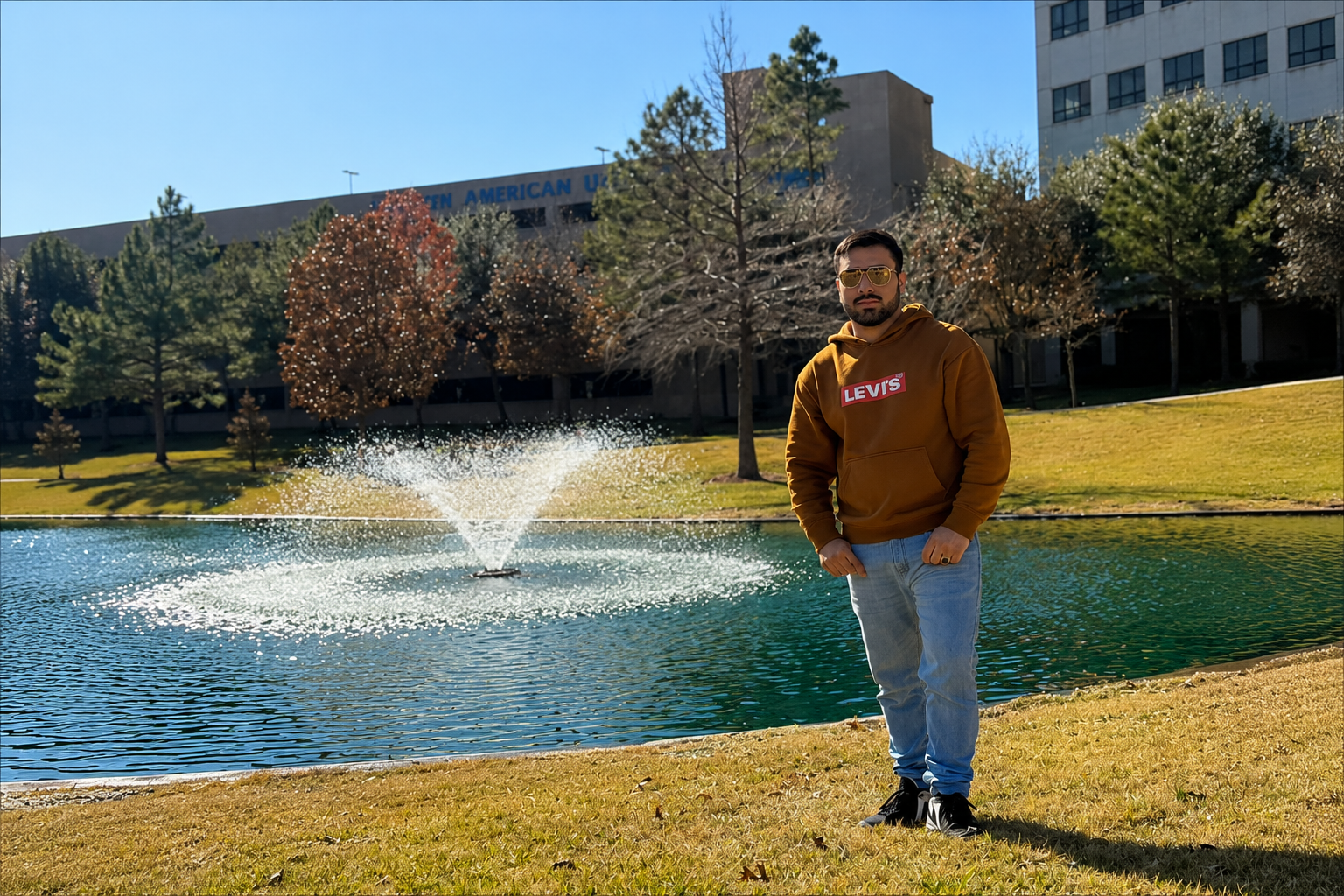
Among the researchers contributing to this transition is Fahad Amin, whose work explores how artificial intelligence, machine learning, big data analytics, blockchain, and advanced cybersecurity frameworks can help organizations identify threats earlier, strengthen digital resilience, and build more intelligent security systems. Through a growing body of research, he has focused on developing approaches that improve threat detection while enabling organizations to anticipate risks before they develop into major security incidents.
Rethinking Cybersecurity for an Evolving Threat Landscape
The cybersecurity landscape has changed dramatically over the past decade. Organizations now generate enormous volumes of digital information while operating across cloud environments, remote work infrastructures, mobile platforms, and interconnected business applications.
This increasing complexity has made cybersecurity significantly more challenging. Traditional security controls remain important, but static defenses alone cannot keep pace with adversaries who continuously adapt their techniques.
Recognizing these challenges, Amin’s research consistently emphasizes proactive cybersecurity rather than reactive defense. Instead of focusing solely on responding to attacks after they occur, his work investigates how artificial intelligence can continuously analyze patterns, identify anomalies, predict emerging risks, and support faster security decision-making.
This philosophy underpins much of his research across multiple cybersecurity domains, where AI serves not as a replacement for security professionals but as an intelligent decision-support capability that enhances organizational resilience.
Artificial Intelligence as a Force Multiplier for Cyber Defense
Artificial intelligence has become one of the most transformative technologies in modern cybersecurity.
Unlike conventional rule-based systems, AI models continuously learn from large volumes of security data, enabling them to recognize evolving attack patterns that may otherwise remain undetected.
In his research on AI-based cybersecurity solutions, Amin examines how machine learning, deep learning, and intelligent automation can strengthen threat detection while improving incident response capabilities. His work explores how AI can analyze network traffic, user behavior, authentication events, and system activity to identify suspicious behavior in real time, allowing organizations to respond more quickly to emerging threats. Rather than relying exclusively on predefined signatures, AI-driven systems continuously adapt to changing attack techniques, making them particularly valuable against previously unknown threats.
Beyond technical implementation, his research also acknowledges the broader challenges associated with AI adoption, including privacy, governance, implementation costs, workforce development, and ethical considerations. This balanced perspective recognizes that successful cybersecurity requires both technological innovation and responsible deployment practices.
Detecting Insider Threats Before Damage Occurs
While many cybersecurity strategies focus on external attackers, insider threats remain among the most difficult risks to detect.
Employees and authorized users already possess legitimate access to organizational systems, allowing malicious or compromised insiders to operate without immediately triggering traditional security controls.
To address this challenge, Amin co-authored research introducing the Honeytoken-Augmented Deception Isolation Forest (HAD-IF) framework.
The framework combines artificial intelligence with cyber deception techniques by integrating Isolation Forest anomaly detection with strategically deployed honeytokens. Machine learning analyzes behavioral indicators such as login activity, failed authentication attempts, file access patterns, sensitive data interactions, and download behavior, while honeytokens provide an additional layer of deception capable of identifying malicious intent when unauthorized users interact with false digital assets. Experimental results demonstrated high detection performance while significantly improving early identification of insider threats.
This work reflects a broader trend toward intelligent security architectures that combine multiple detection mechanisms rather than relying on a single source of evidence.
Building Stronger Defenses Against Advanced Persistent Threats
Among today’s most sophisticated cyber risks are Advanced Persistent Threats (APTs), which often involve highly organized adversaries conducting long-term campaigns against government agencies, critical infrastructure, healthcare organizations, and private enterprises.
Unlike conventional attacks, APTs typically involve multiple phases, including reconnaissance, privilege escalation, lateral movement, persistence, and data exfiltration.
Recognizing the limitations of perimeter-based security, Amin developed research focused on organizational cybersecurity posture rather than isolated security controls.
His proposed framework integrates Zero Trust principles, continuous monitoring, governance, behavioral analytics, incident response planning, and internationally recognized standards such as the NIST Cybersecurity Framework and the MITRE ATT&CK framework. Rather than emphasizing individual technologies, the research advocates a comprehensive organizational approach that strengthens long-term cyber resilience while improving threat detection and response maturity.
The framework reflects an understanding that modern cybersecurity depends on coordinated people, processes, governance, and technology working together.
Leveraging Big Data for Predictive Security
Modern organizations generate massive amounts of security-related information every day.
Network traffic, authentication logs, application events, cloud telemetry, endpoint monitoring, and user behavior collectively produce enormous datasets that contain valuable indicators of cyber risk.
Amin’s research on big data analytics explores how these information sources can be transformed into actionable cybersecurity intelligence.
By combining big data analytics with artificial intelligence and machine learning, his work demonstrates how organizations can improve predictive monitoring, accelerate incident response, and identify emerging attack patterns before they escalate. Rather than viewing data as simply a record of past events, the research positions analytics as a strategic capability that enables proactive cybersecurity operations and informed decision-making.
As cybersecurity continues shifting toward predictive defense models, data-driven intelligence is expected to play an increasingly central role.
Privacy-Preserving Artificial Intelligence
As AI becomes more deeply integrated into cybersecurity, protecting sensitive information remains a critical concern.
Organizations increasingly require intelligent systems capable of learning from distributed environments without unnecessarily exposing confidential data.
Amin’s research extends into federated learning and edge computing, where decentralized machine learning allows devices to collaborate without transferring raw information to centralized servers.
His work proposes adaptive approaches that improve communication efficiency, optimize device participation, and enhance energy performance while preserving privacy. These contributions demonstrate how artificial intelligence can remain both effective and responsible when deployed across distributed computing environments.
This emphasis on privacy-preserving AI reflects one of the field’s most significant emerging priorities.
Expanding Trust Through Secure Artificial Intelligence
Artificial intelligence systems are increasingly being deployed in sensitive environments where trust, transparency, and data integrity are essential.
Recognizing this need, Amin has also explored blockchain-enabled security frameworks for AI applications.
One example involves research integrating blockchain technology with deep learning models for Alzheimer’s MRI classification. By combining artificial intelligence with decentralized verification through blockchain and IPFS, the framework enhances both diagnostic integrity and protection against data manipulation, illustrating how secure infrastructure can strengthen confidence in AI-driven decision-making.
Although developed within a healthcare context, the underlying principles demonstrate broader applications for trustworthy artificial intelligence across industries where secure, verifiable data is essential.
Advancing Cybersecurity Through Research and Innovation
A defining characteristic of Amin’s research portfolio is its interdisciplinary nature.
Rather than concentrating on a single cybersecurity challenge, his work spans insider threat detection, AI-powered cybersecurity, advanced persistent threats, big data analytics, federated learning, blockchain security, binary vulnerability analysis, and intelligent enterprise security architectures.
Each area contributes to a broader objective of enabling organizations to anticipate cyber risks rather than merely respond to them after compromise occurs.
By integrating advances in artificial intelligence with practical cybersecurity frameworks, his research reflects an understanding that future cyber defense will require adaptive systems capable of continuous learning, intelligent analysis, and collaborative decision-making.
Looking Toward the Future of Intelligent Cybersecurity
Cybersecurity is entering a new era where speed, adaptability, and intelligence will increasingly determine organizational resilience.
Artificial intelligence will continue transforming how threats are detected, analyzed, prioritized, and mitigated. At the same time, emerging technologies such as blockchain, federated learning, edge computing, and predictive analytics will further expand the capabilities of modern security operations.
According to Amin’s body of research, proactive cybersecurity is not simply about deploying more advanced technologies. It is about designing intelligent security ecosystems that continuously learn, evolve, and adapt alongside an ever-changing threat landscape.
As cyber risks continue growing in complexity, organizations will increasingly depend on professionals whose work bridges artificial intelligence, cybersecurity strategy, and practical implementation. Through his research contributions across multiple domains of intelligent security, Fahad Amin continues to support this evolution toward more proactive, data-driven, and resilient cybersecurity systems.