
That paradox defined the global response after the U.S. Supreme Court struck down major parts of former President Donald Trump’s sweeping tariff framework. While governments and trade bodies cautiously applauded the move, business leaders warned that uncertainty still clouds the international trade landscape.
Supreme Court Blocks Core Tariff Authority
In a closely watched 6–3 ruling, the Supreme Court concluded that the statute underpinning the import duties did not grant the president authority to impose such broad tariffs. The majority opinion stated clearly that the law “does not authorize the President to impose tariffs,” marking a major legal setback for the administration’s flagship trade policy.
The decision effectively dismantled key elements of the global tariff regime that had reshaped trade relations with allies and competitors alike. However, rather than bringing immediate clarity, the ruling introduced a fresh layer of complexity.
Trump Responds With New 10% “Global Tariff”
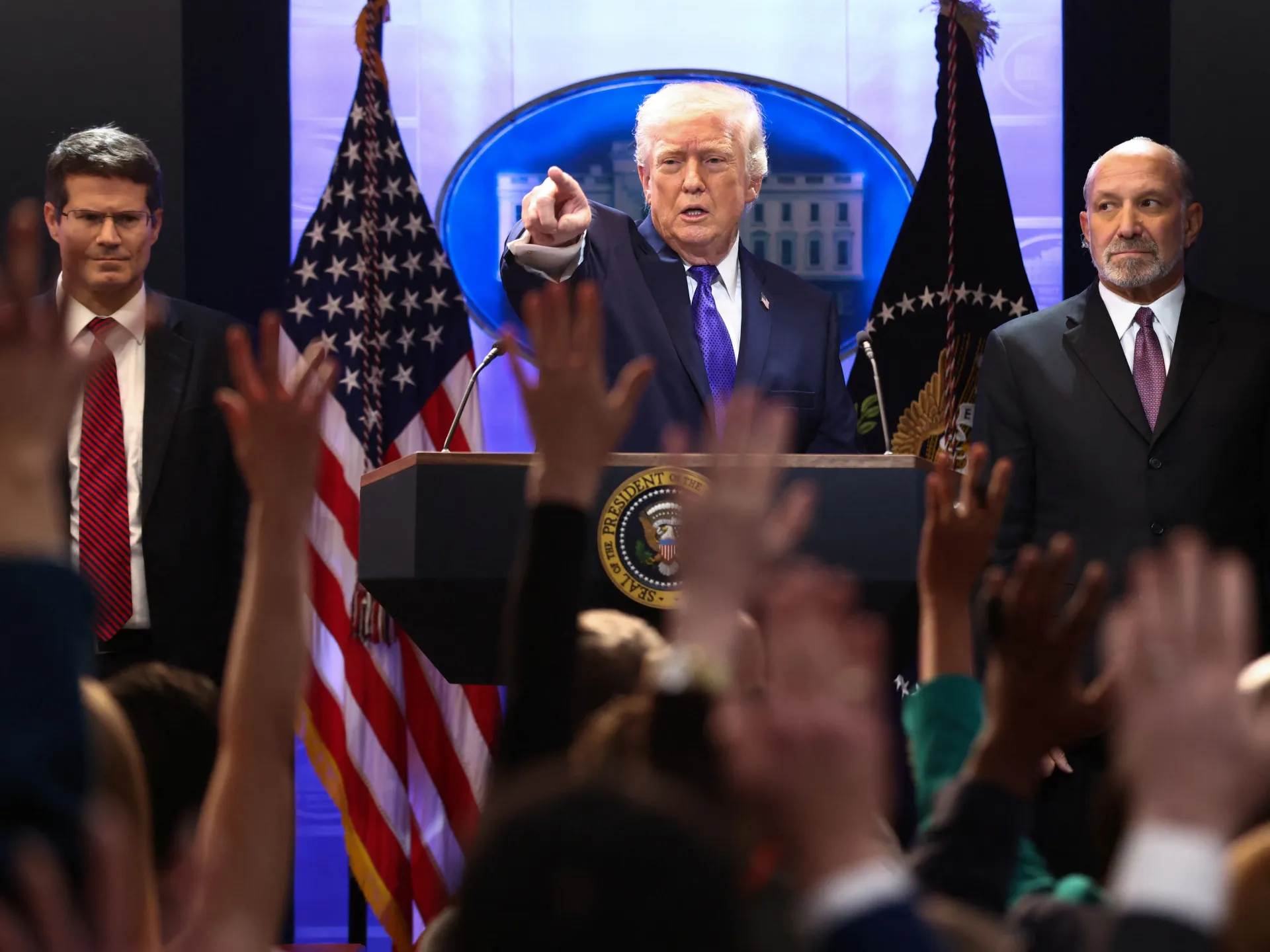
Within hours of the verdict, Trump announced he had signed an executive order introducing a new 10% “global tariff” under Section 122 authority. According to the White House, the revised duties would take effect almost immediately.
Speaking at a press briefing, Trump described the Court’s ruling as “deeply disappointing,” signaling that the administration would continue to pursue alternative legal mechanisms to preserve its trade agenda.
The original tariff framework had affected a wide range of economies, from the United Kingdom and India to the European Union. Several countries — including Vietnam and Brazil — remain engaged in negotiations with Washington, seeking clarity and potential exemptions.
Taiwan: Limited Economic Impact
Taiwan, a crucial hub for advanced semiconductor manufacturing and home to the world’s leading contract chipmakers, responded cautiously. Officials indicated that an initial review suggests the 10% flat tariff may have only a limited effect on the island’s economy.
In a statement, Taiwan’s cabinet said it would continue to closely monitor developments and maintain open communication with U.S. authorities to better understand the specifics of the new measures. Given Taiwan’s central role in global semiconductor supply chains, even modest tariff adjustments can ripple across industries worldwide.
Macron Highlights the Rule of Law
French President Emmanuel Macron reportedly welcomed the ruling as proof of the importance of institutional checks and balances.
Speaking in Paris, Macron emphasized that having an independent judiciary serves as a safeguard in democratic systems. His remarks underscored a broader European sentiment: that the Court’s decision reaffirmed the value of legal oversight in trade policymaking.
The United Kingdom: Trade Deal Remains Largely Intact
The U.K. government signaled that it would work closely with Washington to assess the implications of the ruling. Officials stressed that Britain’s trade position remains relatively strong.
The U.K. secured a broad trade agreement with the United States last year, establishing a 10% levy on many goods while carving out sector-specific arrangements covering steel, aluminum, automobiles, and pharmaceuticals. Because the Supreme Court case focused primarily on reciprocal tariffs, much of the U.K.’s preferential access in these sectors appears unaffected.
Still, business groups remain wary.
British Businesses Face “Murky Waters”
The British Chambers of Commerce (BCC) cautioned that the ruling does not eliminate uncertainty for exporters and importers.
William Bain, head of trade policy at the BCC, remarked that the decision “does little to clear the murky waters” confronting British companies. He noted that the president retains alternative legal avenues to maintain tariffs, particularly on steel and aluminum.
Bain also raised practical concerns: U.S. importers may seek to reclaim duties already paid, but the administrative pathway remains unclear. Questions linger over whether U.K. exporters could share in potential rebates, depending on contractual arrangements.
For British policymakers, the focus remains on reducing tariffs wherever possible to protect competitiveness.
European Union Calls for Stability
The European Commission emphasized that businesses on both sides of the Atlantic rely heavily on stability and predictability.
Olof Gill, spokesperson for trade and economic security, said the EU remains in close contact with U.S. officials to understand how Washington intends to proceed. The bloc continues to advocate for lower tariffs and long-term trade clarity.
In today’s tightly interconnected supply chains, sudden shifts in tariff policy can disrupt investment decisions, pricing structures, and production planning across multiple industries.
Canada Reiterates Its Position
Canada’s trade leadership also responded. Dominic LeBlanc, Canada’s minister responsible for U.S.-Canadian trade relations, said the ruling strengthens Ottawa’s argument that tariffs imposed under emergency economic powers were unjustified.
For Canada — one of America’s largest trading partners — clarity on tariff policy remains vital to maintaining cross-border supply chains in industries such as automotive manufacturing, agriculture, and energy.
Switzerland: Relief, But No Victory Yet
Switzerland’s technology industry association, Swissmem, described the Court’s ruling as positive news for exporters who have suffered under high tariffs. However, the group cautioned that this is not yet a definitive victory.
Swissmem warned that alternative U.S. legal tools could still be invoked to legitimize tariff measures. It urged Swiss policymakers to pursue new free trade agreements to strengthen the country’s competitive position globally.
“The crucial thing now,” the association noted, “is to secure stable relations with the U.S. through a binding trade agreement.”
Businesses Still Face Complex Reclaim Processes
The International Chamber of Commerce (ICC) observed that many companies will welcome the Supreme Court’s intervention, particularly given the financial strain imposed by months of elevated duties.
However, the ICC stressed that businesses should not expect a simple or automatic refund process. U.S. import procedures are often administratively complex, and the ruling offers little guidance on how companies might recover previously paid levies.
Without clear direction from the Court of International Trade and other U.S. authorities, firms could face additional compliance costs and even litigation risks.
No Clear Trade “Win” Yet
Despite the relief expressed by many governments, the broader trade environment remains unsettled. The introduction of a new 10% tariff, combined with unresolved rebate mechanisms and ongoing negotiations, leaves businesses navigating a landscape filled with legal and commercial ambiguities.
In essence, while the Court’s decision curtailed presidential authority in one domain, it did not eliminate the strategic use of tariffs as a policy tool.
For multinational corporations, exporters, and supply-chain managers, the challenge now lies in adapting quickly to shifting regulations while maintaining operational resilience.
A Turning Point — But Not the Final Chapter
The Supreme Court’s ruling represents a significant constitutional moment in U.S. trade policy. It reinforces judicial oversight while reshaping the boundaries of executive authority.
Yet the global reaction makes one thing clear: America’s trading partners welcome the Supreme Court’s tariff decision — yet companies are still left to operate in uncertain, “murky waters.”
Until a durable, transparent, and legally settled framework emerges, businesses worldwide will continue balancing cautious optimism with pragmatic risk management in an evolving trade order.