
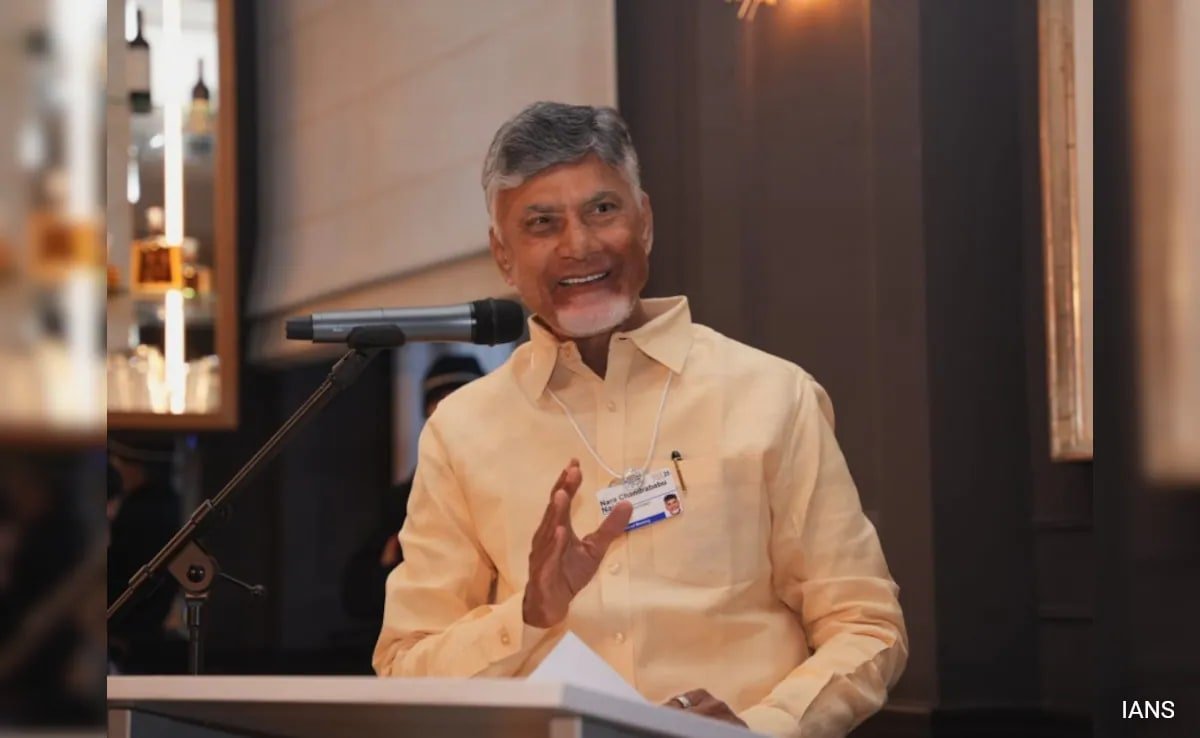
Written by Sakhamuru Srinivasa Prasad, Chief editor of a news paper from India.
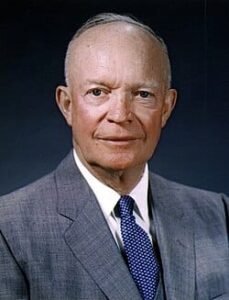
Dwight D. Eisenhower served as the 34th President of the United States of America, holding office for two consecutive terms between 1953 and 1961. Nara Chandrababu Naidu is the Chief Minister of Andhra Pradesh, distinguished by a rare and historic record of long tenures as Chief Minister of both the united and the bifurcated state. At first glance, drawing a parallel between the leader of a global superpower and the head of a sub-national government may seem unconventional. Nevertheless, Chandrababu Naidu merits such a comparison on substantive grounds. Profound similarities emerge in their governance philosophies and policy approaches. Both leaders can be characterized as visionaries. Their governance was informed by a strong sense of intergenerational responsibility, leading them to frame policies with a long-term developmental horizon. America’s contemporary status as a global superpower owes much to such forward-thinking leadership. Comparably, the gradual advancement of the Telugu community toward higher levels of prosperity, marked by rising per capita incomes and global economic integration, can be attributed to the strategic decisions undertaken by Naidu during his tenure as Chief Minister.
The policy decisions taken by both leaders continue to be regarded as benchmarks even today. It is particularly notable that, across multiple sectors, subsequent policies have not decisively surpassed the foundational initiatives conceived and implemented under their leadership.
In the United States, Eisenhower’s conception of the Interstate Highway System, which connected the entire nation through an integrated transport network, fundamentally altered the country’s economic and social landscape. This initiative played a decisive role in consolidating the United States’ position as a leading global power by enabling large-scale trade, mobility, and economic expansion. Even after more than seven decades, few public infrastructure projects in the United States have matched its transformative impact. Eisenhower’s decision thus retains enduring relevance and is unbeatable and unparalleled in American history even today.
Embodying a similar brand of foresight, Chandrababu Naidu prioritized infrastructure as the bedrock of development. He is credited with pioneering India’s ‘Infrastructure Revolution,’ leaving an indelible mark on the nation’s landscape. During the tenure of Prime Minister Atal Bihari Vajpayee, his strategic thinking significantly influenced the conceptualization of the Golden Quadrilateral Highway Project. By linking Delhi, Mumbai, Chennai, and Kolkata, the project created a structural foundation for India’s accelerated economic growth. Earlier, as Chief Minister of Andhra Pradesh, Chandrababu Naidu articulated a new development paradigm. The establishment of HITECH City in Hyderabad, the expansion of road networks, the construction of flyovers, and the creation of technology parks collectively gave rise to the Cyberabad urban region. If Hyderabad operates on ‘auto-mode’ today and boasts one of the highest per-capita incomes in the region with a sustained growth trajectory, it is a testament to Chandrababu’s decisive leadership. Thirty years on, his strategic contributions remain relevant, unrivalled and “unbeatable” even today.
The construction of the Amaravati metropolis as the capital of Andhra Pradesh follows this very trajectory of grand vision. Conceived by Naidu as a premier hub for wealth creation and inclusive growth, Amaravati stands as a global pioneer, a city being built through unprecedented public participation.
Historical parallels can be drawn to Eisenhower’s focus on the frontiers of science; just as Eisenhower’s foresight led to the founding of NASA, Naidu’s vision anchored the IT sector in Hyderabad. His ability to bring Microsoft to Indian shores was a masterclass in global diplomacy and economic branding. Today, anticipating the next frontier, he is committed to making Andhra Pradesh a mainspring of the space industry for rocket and satellite manufacturing. The appointment of Dr. Somanath, a man synonymous with India’s space triumphs, as a government advisor is a clear testament to Naidu’s resolve to make the state a leader in satellite and rocket technology.
Whether in Eisenhower’s America or Chandrababu Naidu’s Andhra Pradesh, governance was guided by long-term public interest rather than ephemeral political considerations. The consistency and coherence of their decisions are striking. Eisenhower led the world’s leading power seven decades ago, while Chandrababu Naidu is serving as Chief Minister of a state like Andhra Pradesh for the fourth time over the past three decades. Both are ‘361-degree’ administrators, possessing a vision that extends beyond the conventional horizon. The relentless march of time stands as the ultimate witness to their enduring legacies.